

Child Custody in Greater Noida: Court Process Guide
The types of child custody in Greater Noida, as recognized by Indian courts, primarily include physical custody and legal custody. Physical custody refers to the actual care, control, and supervision of the child, meaning where the child lives on a day-to-day basis. Legal custody, on the other hand, involves the right to make important decisions regarding the child’s upbringing, such as education, health, and welfare.Custody can further be categorized as sole custody or joint custody. In sole custody, one parent is given the exclusive right to physical and/or legal custody of the child, while the other parent may be granted visitation rights. Child Custody in Greater Noida: Court Process Guide Joint custody involves both parents sharing either physical custody, legal custody, or both, allowing the child to maintain a relationship with both parents.The court decides the type of custody based on factors like the child’s best interests, the parents’ ability to provide a stable environment, and the child’s wishes, depending on their age and maturity. The ultimate aim is to ensure the child’s welfare and happiness while maintaining a healthy relationship with both parents whenever possible.
People Also Read: How to Get a Refund After Cancelling a Flat Booking?
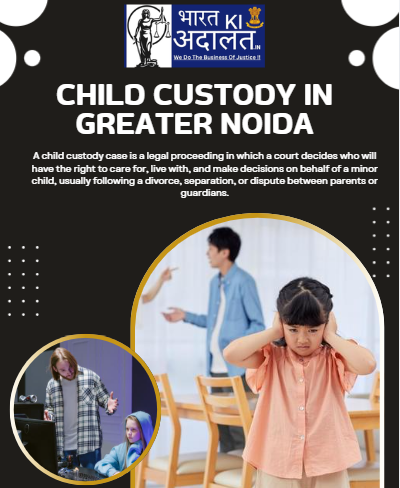
What is Child Custody?
Child custody refers to the legal right and responsibility of a parent to care for, raise, and make important decisions regarding a child’s upbringing. In India, custody matters are governed by a mix of laws such as the Guardians and Wards Act, 1890, the Hindu Minority and Guardianship Act, 1956, and various personal laws applicable to different religions. The main focus of the courts in custody cases is to safeguard the physical, emotional, educational, and financial well-being of the child, ensuring their overall welfare and stability.
Types of Custody Arrangements
- Physical Custody: The child primarily lives with one parent, while the other parent usually has visitation rights.
- Legal Custody: The right to make major decisions regarding the child’s education, health, and welfare.
- Joint Custody: Both parents share responsibilities, often with the child spending time in both households.
- Sole Custody: One parent has full physical and legal control, usually granted if the other parent is unfit or absent.
Which Court Handles Child Custody in Greater Noida?
For residents of Greater Noida, custody petitions generally fall under the jurisdiction of the Family Court at Gautam Buddh Nagar, located in the Surajpur court complex. If the Family is not accessible for a particular petition, the case may be filed in the District instead.
Jurisdiction is typically determined by:
- Where the child ordinarily resides,
- Where the marriage was solemnized, or
- Where the parties last lived together.
Getting the jurisdiction right at the outset is crucial in child custody cases in Greater Noida to avoid unnecessary delays.
Step-by-Step Court Process for Child Custody in Greater Noida
Step 1: Consult a Family Lawyer
Seek legal advice from an experienced family law advocate who will evaluate your case, explain your rights, and prepare necessary documents.
Step 2: Draft and File the Custody Petition
File the custody petition in the appropriate Family Court with jurisdiction. Include:
- Child’s details
- Parent’s details
- Existing living arrangements
- Reasons for seeking custody
- Evidence supporting the claim
Step 3: Submission of Supporting Documents
Documents include:
- Child’s birth certificate
- School records
- Identity proofs of parents
- Marriage certificate
- Income documents
- Medical records (if relevant)
Step 4: Court Notice to the Other Parent
court issues a notice to the other parent to submit their response and objections.
Step 5: Mediation and Counseling
Family courts encourage mediation to reach an amicable custody arrangement. Successful mediation may lead to court-approved settlement.
Step 6: Evidence and Hearings
If mediation fails, hearings occur where both parties present:
- Witness statements
- Documents
- Financial records
- Evidence related to the child’s welfare
Step 7: Interaction with the Child
Judges may personally interact with the child to understand their preferences, especially if the child is mature enough to form a reasoned opinion.
This process is generally followed by family courts in Greater Noida for custody disputes.
Documents Required for Child Custody Cases
- Marriage certificate (if applicable)
- Birth certificate of the child
- Proof of residence and income
- School records of the child
- Any prior court orders related to divorce, maintenance, or domestic violence
- Evidence supporting your claim, such as:
- Messages
- Witness statements
- Financial records
Factors Considered by the Court in Custody Matters
- Age of the Child: Young children are often placed with the mother unless there are exceptional circumstances.
- Financial Stability: Courts review whether a parent can adequately support the child financially.
- Educational Opportunities: The ability to provide quality education and a stable environment is important.
- Emotional Bond: The court assesses the emotional relationship between the child and each parent.
- Child’s Preference: Older children may be allowed to express their custody preference.
- Safety and Welfare: The child’s physical and emotional safety is the court’s highest priority.
How Long Does the Child Custody Process Take?
Timelines for Child Custody Cases in Greater Noida
- Mutually Agreed Custody: Settled through mediation, typically finalized within a few months.
- Contested Cases: Involving extensive evidence and multiple hearings, can take a year or longer.
- Efficiency Tips: Filing in the correct court and submitting complete documentation upfront can significantly speed up the process.
Conclusion
Knowing the court process helps parents prepare for legal proceedings and make informed decisions. Courts prioritize the child’s welfare above all and carefully evaluate every aspect of the child’s life before granting custody.
If you are involved in a custody dispute, seeking professional legal guidance and presenting a strong case can protect your parental rights and ensure the best future for your child. Following this guide enables parents to navigate the legal process with greater confidence and effectiveness.
Advocate Sagar is a legal professional who assists clients in various family law matters, including child custody disputes, divorce proceedings, maintenance claims, domestic violence cases, and other family matters. In child custody cases, Advocate Sagar can help parents understand their legal rights, prepare custody petitions, gather supporting evidence, represent them before the Family Court, and work toward securing an arrangement that serves the best interests of the child.
With legal guidance throughout the court process, clients can better navigate complex custody proceedings, mediation sessions, visitation rights issues, and related family disputes. Whether seeking sole custody, joint custody, or modification of an existing custody order, professional legal assistance can help ensure that all legal requirements are properly addressed.
Contact Us: 9999019695
Website: https://advocatesagarsharma.com
Address: Adv Sagar Sharma Law Office Near Badami House Sector -1 Bisrakh Greater Noida West Uttar Pradesh